
Airframe Ultra Controls
Gamepad first: feather the trigger, pitch the nose with brake, and treat on-foot inputs as a different game.
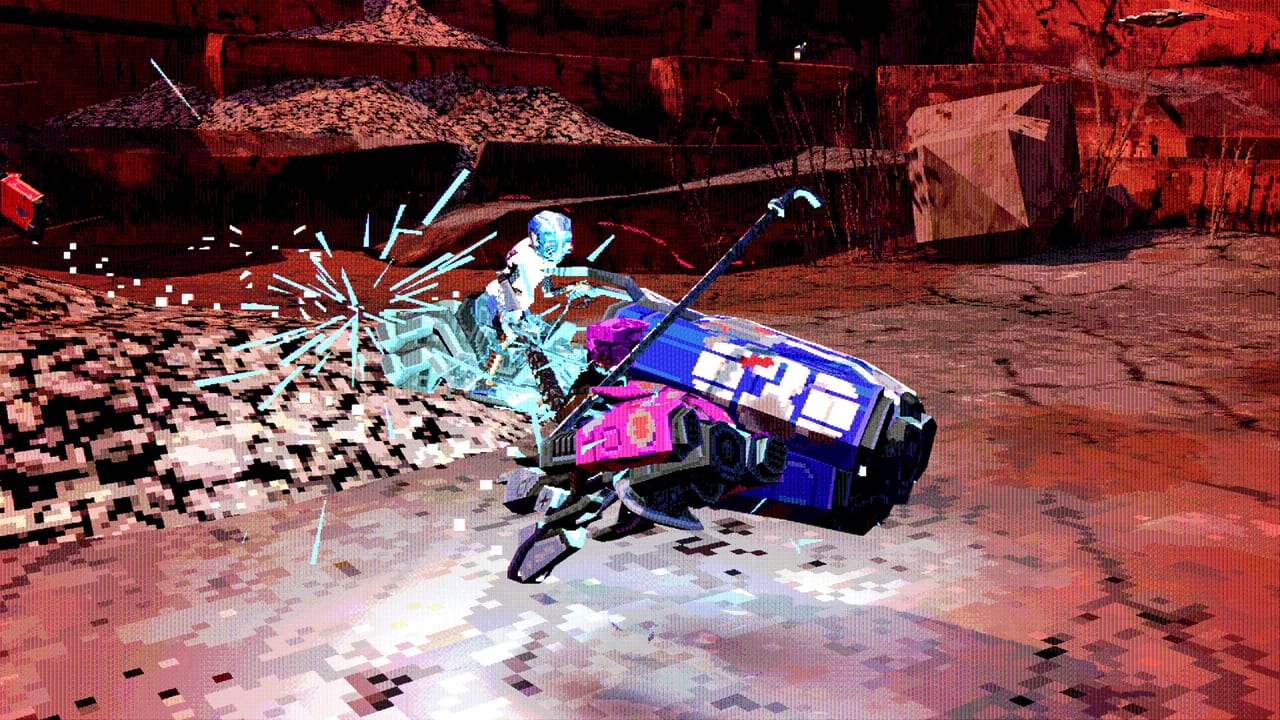
Airframe Ultra splits the same buttons across two bodies. On the bike you are a hovercraft with gears, coolant, and a nose that pitches when you brake. On foot you are a weighty brawler with stamina, jumps, punches, kicks, and flips. Mixing those languages is the skill floor. This page is the input map. Pair it with boosting and combat once the buttons stop being the thing you think about.
A gamepad is highly recommended. Keyboard is valid, and keys were rebindable as of the February 2026 open beta, but the throttle story is different on each device.
Throttle, translate, and auto gears
Throttle is how you build speed. On keyboard it is binary: hold the throttle key (or a directional key, depending on your bind) and you are at full demand. On a gamepad the trigger is analog. Feathering that trigger is how you sit under the overheat line, sneak through a Warehouse door, or keep a Cruiser from understeering into a wall. If you only ever mash full trigger, you will think the bikes are twitchy. They are not. You are asking for maximum heat.
When you are not accelerating, the airframe can translate. That is the strafe: slide sideways without a full yaw to line a doorway, grab a canister, or keep a shotgun angle. New riders treat hoverbikes like cars. Better riders tap off throttle, translate, then throttle again so the nose never has to swing as far.
Gears are automatic. Bluntnose steps land around 80, 110, 140, 165, 190, 220, and 250 km/h. You do not clutch. You manage heat. Holding high speed fills the overheat gauge; when it cooks, the bike dumps pace and takes chassis damage. Boosting dumps heat. Lifting the trigger dumps heat. Pinning 100% keyboard throttle through Ocean Drive does not.
Brake, jump, and airborne control
Brake is not only a slow-down. Holding brake pitches the nose up, tightens handling, and gives you real authority while airborne. Use it to set a landing, to climb a face that a flat nose would slap, and to keep a boost from burying you into the floor. Releasing brake lets the bike snap back toward the speed you had, so a short brake into a corner is a speed-preserve tool, not a panic dump.
Jump dips the chassis slightly, then pops you up. That dip is real: jumping into a low pipe can kiss the ground first. Jump to clear gaps and to keep boost speed from dying on contact, not as a fidget. Cruiser is front-heavy and will point down if you mix sloppy air brake with boost. Vector wants a shallow glide, not a skyward brake, when you hunt an ultraboost. Those chassis notes belong on boosting; the input is the same: brake is pitch, not just friction.
Duck, kick, and bike melee
Hold crouch on the bike to duck. You sit lower and become a smaller target. As of beta 0.31 (the Steam Next Fest demo build), ducking does not grant damage resistance, and you cannot swing melee in that stance. Duck to live through a doorway of bullets. Stand up to actually hit someone with a bat, traffic sign, or chainsaw. If you live in duck, you are only surviving, not scoring.
Kick while mounted throws a leg opposite your turn. Catch another mounted rider and you spin them out. Kick a wall and the chassis shoves the other way; Heavy riders and Cruisers shove harder. Mounted melee is a drive-by, not a combo. Traffic sign wants speed. If you want real strings, dismount. The combat guide covers slots and KO value. Here: duck disables the swing, and kick is not a punch.
On foot: jump, punch, kick, flip
Dismount and the same pad becomes a brawler stick. Jump has startup: you squat, then leave. Punch without a weapon steps you forward, which is why punch-boosted jumps exist. Kick staggers and taxes a hidden kick stamina bar plus the main bar. Flip is a dive that reverses direction mid-startup, and it is a Standard/Light tool, not a Heavy tool.
Sprint by tapping boost; turn too hard and you eat floor. Weapons do not fire while sprinting. Crouch to shrink, to start a dive (crouch, release, jump), and to roll a fall. Light bodies get extra stamina, chain flips, and a jumping forward kick. Heavy bodies hit harder, swing slower, cannot jump-forward-kick, and should not be your first-hour pick. Standard is the learning body. Stars and hurtboxes live with Riders. Block by walking backward if your body allows it; Heavy cannot. Practice the punching bag. Arenas will not teach you this kindly.
Rebinds, split-screen, and practice habits
Rebindable keys are in as of the February 2026 open beta. If throttle, brake, and boost sit on panic fingers, move them. Gamepad users should confirm boost is not clustered with dismount if they keep ejecting at speed.
Steam lists online PvP, online co-op, and split-screen. Practice tutorial, then a bot race, then one public circuit. Read How to Play for loadout order, tracks so votes match your hands, and demo so you know whether the download is a tutorial cage or a six-track test. If a motion feels impossible, it is usually throttle, not steering. Let off, translate, brake-pitch, then throttle.
Frequently Asked Questions
Quick answers for racers still learning Megacity West.
Why does keyboard feel harsher than a gamepad?
Keyboard throttle is full demand. A trigger is analog, so you can sit under overheat and translate more cleanly. Rebind keys if you stay on keyboard; a pad is still the easier default.
What does brake actually do in the air?
It pitches the nose up and gives you authority on the landing. Use short brake to set a boost angle or to survive a jump. It is not only a speed dump.
Does ducking reduce damage on the bike?
Not as of beta 0.31. Ducking lowers your hurtbox and blocks melee swings. Stand up to fight. Combine that with the combat guide rather than hiding in crouch.
Can I rebind keys?
Yes, as of the February 2026 open beta. If dismount, boost, and brake sit on panic fingers, move them before your next circuit.
Where do boost inputs and coolant rules live?
On the boosting page. This page is the buttons. That page is coolant versus dry-boost, compounding, and per-chassis behavior.
Is there a separate on-foot control scheme?
Same pad, different verbs: jump, punch, kick, flip, sprint-tap, crouch-dive. Learn it in the tutorial, then in Warehouse, before you vote into Estate's interiors.